What Happens in a Year-End Tax Review and What to Bring
Last week I wrote about why a year-end review beats waiting until April. A few of you asked the same follow-up question: what does one actually look like?
Fair question. Nobody wants to book something they can't picture, so here is the plain version.
What we go over
A year-end review is a working session built around your numbers, not a lecture on tax law. We look at where your year stands today and what can still change before December 31. That usually means:
- Your income so far and what you expect for the rest of the year
- What has been withheld from your paychecks, plus any estimated payments you've made
- Retirement and HSA contributions
- Your giving
- Investments, including gains and losses sitting in your accounts
- Side income and the expenses that go with it
- Anything that changed in your life this year
Not every item matters for every person. A couple with two salaries has a different list than a freelancer who also sells online. The point is to find which items matter for you.
What to bring
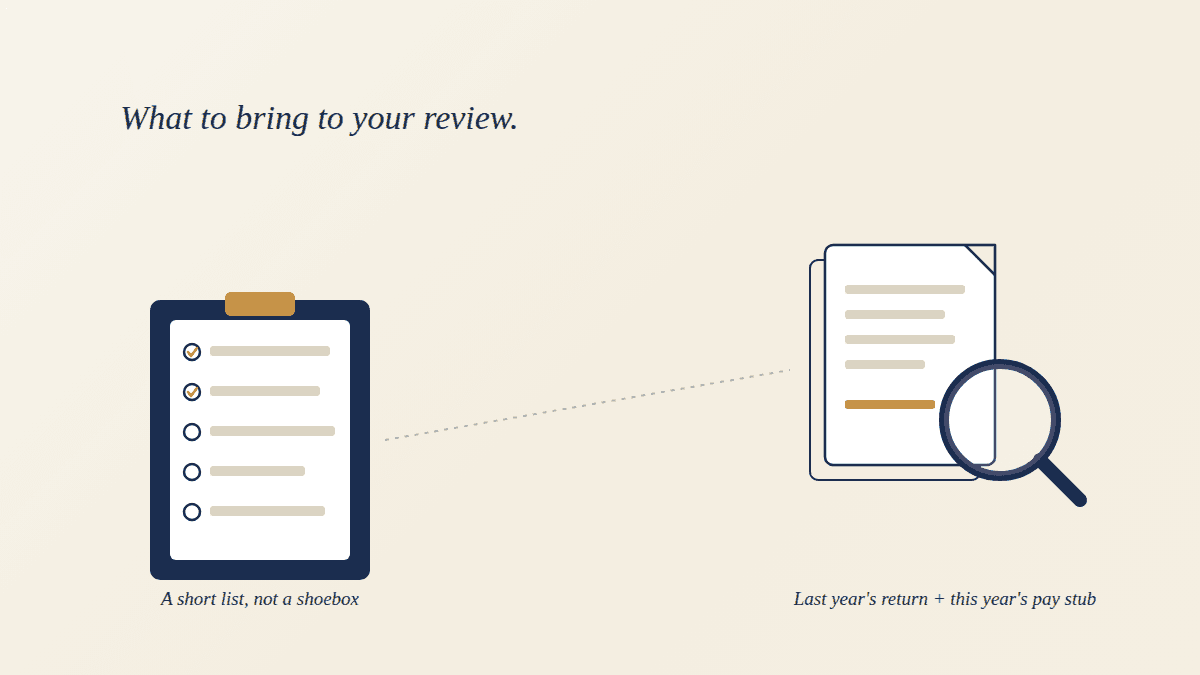
You don't need a shoebox of receipts. A short stack of documents is plenty:
- Last year's tax return
- Your most recent pay stub, which shows year-to-date income and withholding
- A running total of any side income and business expenses
- Year-to-date statements for taxable investment accounts
- A rough total of what you've given to your church and other charities
- Your retirement and HSA contribution totals so far
- A list of anything that changed, such as a new job, a marriage, a baby, a move, or a home purchase or sale
If you're missing something, bring what you have. A partial picture still beats none.
What you walk away with
The goal is a short list of moves with dates attached. Maybe it's raising your withholding, timing a gift, or making a catch-up payment before a deadline. Maybe it's nothing, and you leave knowing your year is on track. Either answer is worth having before the year closes.
One thing to do today
Put last year's return and your latest pay stub in the same folder. That takes five minutes, and everything else gets easier once those two sit side by side.
Want someone to look at your actual numbers?
Now you know what the session looks like. The next step is picking a time while the year is still open.
Book Your Year-End Personal Tax Review →Ralph Estep Jr., LPA
This article is general information and not personal tax advice. Your situation may differ, so talk with a licensed professional before making decisions.