LPA vs. CPA: What's the Difference — and Which One Do You Need?
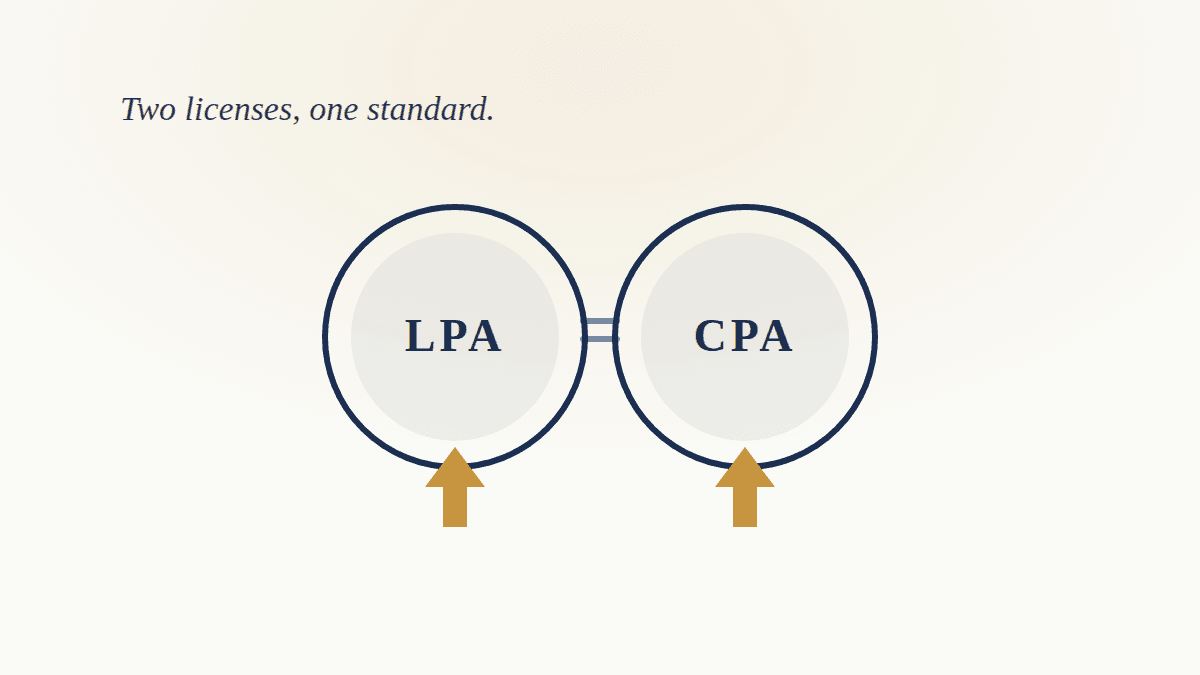
I get this question all the time, and I love that people ask it. It means you're doing your homework before trusting someone with your money — and that's exactly the instinct I want you to have. So let's clear it up, plainly and without the alphabet soup.
What a CPA is
A CPA — Certified Public Accountant — is someone who passed the Uniform CPA Exam and holds a license from their state's board of accountancy. CPAs can do the full range of public accounting work, and one category of work is legally reserved for them: attestation — auditing and formally reviewing financial statements and signing an opinion on them.
What an LPA is
An LPA — Licensed Public Accountant — is also licensed by a state board of accountancy to practice public accounting. It's the credential I hold, here in Delaware, where the Board of Accountancy licenses both CPAs and Public Accountants. An LPA can prepare your taxes, keep your books, run your payroll, help you plan, and advise your business — the work most people actually need, year in and year out.
What both can do for you
- Tax preparation and tax planning — personal and business
- Bookkeeping and financial statements for your own management use
- Payroll, QuickBooks, and day-to-day business support
- Financial guidance — budgeting, debt payoff, and planning ahead
Where they actually differ
The real, legal difference comes down to one thing: audited and reviewed financial statements. If a bank, investor, or regulator requires an audit or a formal review with an accountant's opinion attached, that engagement needs a CPA. Here's the honest truth, though — most individuals and most small businesses will never need that service. If you ever do, a good LPA will tell you so and point you to the right person. That's what integrity in this profession looks like.
What matters more than the letters
After 30+ years in practice, I'll tell you what I'd look for if I were hiring an accountant for my own family:
- Experience with people like you. A creator, a family, and a contractor all have different financial lives. Ask who they serve most.
- Whether they explain things without judgment. If you leave a meeting feeling ashamed or confused, that's the wrong fit — no matter what's on their license.
- Responsiveness. Tax problems get more expensive when they sit. You want someone who answers.
- A verifiable license. Look them up with your state's board of accountancy. Anyone legitimate will welcome it.
- A PTIN. Anyone paid to prepare federal tax returns must have an IRS Preparer Tax Identification Number. No PTIN, no engagement.
Common questions
Can an LPA prepare my taxes?
Yes. A Licensed Public Accountant is state-licensed to practice public accounting, including tax preparation and planning. Anyone who prepares federal tax returns for compensation — LPA, CPA, or otherwise — must also hold an IRS Preparer Tax Identification Number (PTIN).
Is an LPA less qualified than a CPA?
No — it's a different license, not a lesser one, for most everyday needs. Both are state-licensed accounting professionals. The main legal difference is that audited and reviewed financial statements (attestation work) are reserved for CPAs. Most individuals and small businesses never need those services.
When do I specifically need a CPA?
When you need audited or reviewed financial statements — typically because a lender, investor, bonding company, or regulator requires them. For tax preparation, bookkeeping, payroll, and financial guidance, both LPAs and CPAs can serve you.
How do I verify an accountant's license?
Check with your state's board of accountancy — in Delaware, that's the Delaware Board of Accountancy, which licenses both CPAs and Public Accountants. A legitimate professional will never be bothered that you checked.
Wondering what hiring one actually costs? I've broken that down too, in How Much Does an Accountant Cost?
Still not sure what you need?
That's what a discovery call is for. Bring your questions — taxes, books, or just "where do I even start?" — and we'll figure out the right next step together. No pressure, no judgment.
Book a Free Discovery Call →