Estimated Tax Payments: Are You on Track for 2026?
Picture a worship leader who started teaching guitar lessons in March. Her students pay by Venmo and cash, and the money feels like a nice bonus. Nobody takes tax out of it. By October she has earned a few thousand dollars with nothing set aside, and the tax on that income is still coming.
Her situation is common. The tax system is pay-as-you-go. When an employer withholds from your paycheck, that covers it. When money arrives with nothing withheld, the IRS expects you to send in payments yourself during the year.
Who this applies to
Estimated payments are worth a look if you have any of these, even if you also hold a regular job:
- Freelance or side business income
- Interest, dividends, or investment gains
- Rental income
- Retirement account withdrawals with no tax withheld
The dates
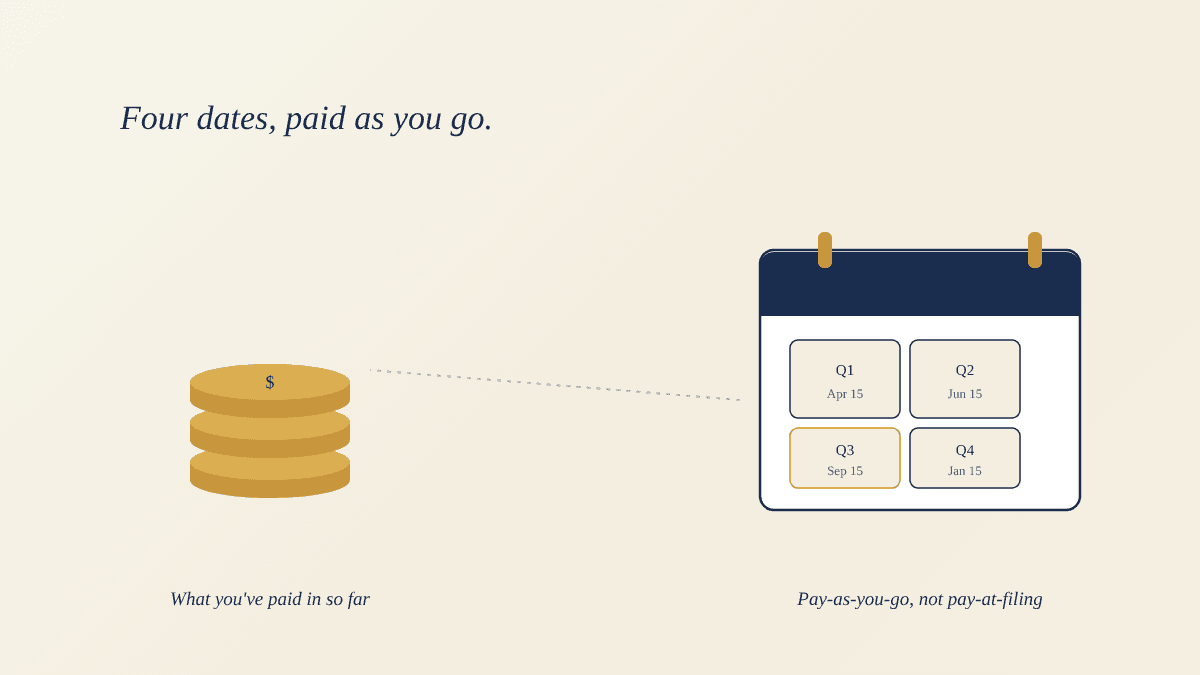
For 2026, the four payments are due April 15, June 15, September 15, and January 15, 2027. That last one falls after the year ends, which catches people off guard. If you file your return and pay everything you owe by the end of January, you can skip it.
How much is enough
You can avoid an underpayment penalty by paying at least 90 percent of this year's tax, or at least 100 percent of last year's total tax. If your adjusted gross income last year was above $150,000, the second number becomes 110 percent.
Withholding from a paycheck counts too, and it is generally treated as if it were paid evenly across the year. That gives you a fix if you're behind this late in the year. Raising the withholding on your remaining paychecks can close a gap that estimated payments would have covered.
The penalty works like interest on the amount you were short, for the time you were short. It isn't a flat fine, but it adds up.
One thing to do today
Add up what you've paid toward 2026 so far: the withholding shown on your pay stubs plus any estimated payments you've sent. Then look at the total tax on last year's return. If you're well under either number, you still have time to fix it.
Want someone to look at your actual numbers?
Estimates are easy to get wrong because they rest on guesses about the rest of the year. A review turns those guesses into a number you can act on.
Book Your Year-End Personal Tax Review →Ralph Estep Jr., LPA
This article is general information and not personal tax advice. Your situation may differ, so talk with a licensed professional before making decisions.