Capital Gains and Loss Harvesting: What to Check Before Year-End
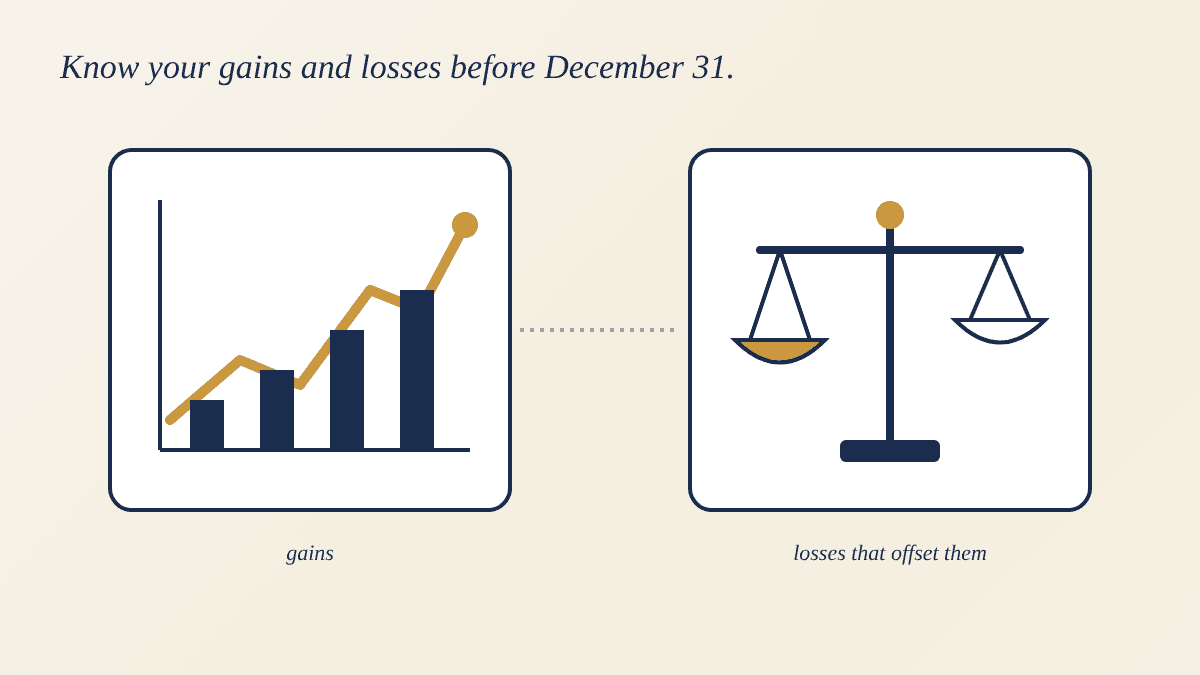
Picture an investor who opens his December statement and finds a mutual fund paid out a large capital gain distribution. He didn't sell anything. He still owes tax on it.
Gains and losses for 2026 get decided by what happens before December 31, so November is a good time to look.
Short-term and long-term
If you hold an investment for more than a year before selling, the profit is a long-term gain. It is taxed at 0, 15, or 20 percent depending on your taxable income. For 2026:
- The 0 percent rate applies to taxable income up to $49,450 for single filers and $98,900 for married couples filing jointly
- The 15 percent rate runs up to $545,500 for single filers and $613,700 for joint filers
- The 20 percent rate applies above that
Taxable income means after your deductions. Gains on investments held a year or less are short-term and taxed at your regular rate. Higher earners may also owe an extra 3.8 percent net investment income tax, which starts at $200,000 of modified adjusted gross income for single filers and $250,000 for joint filers.
What loss harvesting means
If an investment is worth less than you paid, selling it creates a loss. Losses first offset gains. If your losses are bigger than your gains, you can use up to $3,000 of the extra against other income this year and carry the rest forward to future years.
This applies to regular taxable accounts. Losses inside an IRA or 401(k) don't count for tax purposes.
The wash sale rule
You can't sell at a loss, buy the same or a substantially identical investment within 30 days before or after the sale, and still claim the loss. The window covers purchases in your other accounts too. If you plan to harvest a loss, check the dates first.
Let the investment decision come first
A tax bill is a poor reason to hold or sell something. Taxes should shape the timing and which shares you sell, not whether the investment still belongs in your plan.
One thing to do today
Open your taxable brokerage account and find two things: your unrealized gains and losses, and how long you've held each position. Don't sell anything yet. Just make the list.
Want someone to look at your actual numbers?
Which sales make sense depends on your income, your other gains, and your plans. Run the numbers with someone before you hit sell.
Book Your Year-End Personal Tax Review →Ralph Estep Jr., LPA
This article is general information and not personal tax or investment advice. Your situation may differ, so talk with a licensed professional before making decisions.